


Alhaji Umar Modou N’jai
I love my country Sierra Leone so dearly and therefore enjoy all its contradictions. You declare a holiday to mark International Women’s day and at the same time involved in silencing the voices of women. Voice and agency are fundamental to democracy and any other transformational system of governance. Bail is also a fundamental right of citizens, and also an indicator of how healthy the justice system is in any country.
You cannot have one foot in democracy and the other in despotism. If you chose democracy, Freedom of speech, expressions of all sorts, movement, associations, participation, social justice and equity are what makes it work. Criticims, disagreements, protests, holding officials accountable, and sometimes insults directed at you constitute the burden of holding public office. You cannot hold a public office and be thin skinned at the same time. This is the case not just for democratic systems but all other forms of progressive systems of government.
As a matter of fact, all forms of government that are transformational, be they a democracy or not, tends to uphold these basic tenets that empower its society for development. Only true despotic systems deny these values to their citizens, and the end result is always backwardness, retrogression, and anarchy.
Women are essential, transformative agents in society and the highest manifestation of social equilibrium in any country. This is why Captain Thomas Sankara, arguably one of Africa’s best President, a champion of women’s liberation said, “there is no true social revolution without the liberation of women. May my eyes never see and my feet never take me to a society where half the people are held in silence. I hear the roar of women’s silence. I sense the rumble of their storm and feel the fury of their revolt.” (Thomas Sankara, Women’s liberation and the African Freedom Struggle). Sankara was not a democratically elected leader but social justice, equity and empowerment of women was at the heart of his liberation movement.
The same could be said of Amilcar Cabral, Africa’s foremost revolutionary philosopher and architect of the Guinea Bissau and Cabo Verde (Cape Verde) liberation struggle. Women like Tintina Sila, murdered by Portuguese Imperialist, 10 days after Cabral himself was murdered were at the heart of Cabral’s total liberation philosophy. “There is no fight where the woman is not a part of it, and there is no good moment that the woman did not take part in”, said Cabral. In next door Guinea, madam M’Balia Camara became the rallying cry of the independence movement of Sekou Toure, after she (heavily pregnant) was violently murdered by the French administration. In honor of her great sacrifice, February 9th was named Guinea women’s day.
What Sankara, Cabral and even Sekou Toure knew was the centrality of women in our African communitarian systems and the history of oppression of women from slavery through, racism, colonialism, neocolonialism, class struggles and post-colonial state. African Women disproportionately suffered from these global system. Slavery, a labor imperative brought on rape and dehumanization for African women; colonialism, a territorial imperative disrupted traditional indigenous status quo of the African woman shifting the equilibrium in favor of men, who went to school and got technical degrees. Colonialism reduced traditional prestigious occupational roles of women to the informal sector in our societies.
Class systems and hierarchies driven by patriarchy continued within the post-colonial state, driven by state systemic failures and inability to decolonize. Of course neocolonialism continue to extract, exploit and rape the natural resources of indigenous communities with women disproportionately impacted by forced displacements, loss of land, health issues from pollution of their drinking water and air, agricultural losses from soil contamination, loss of dignity, ancestral connections and forced migrations as refugees, that further subject them to gender based violences, rape and trafficking.
Despite these constraints of patriarchal systems of the colonial, neocolonial, neoliberal clones, and religions, Professor Ali Mazrui depicts the African woman as a central, foundational figure that is often the custodian of fire (energy resources), water (brings life), and the land (agriculture) with God being the custodian of air. Hence, women still hold high responsibilities for labor and sustenance in our societies.
Coming back to Sierra Leone, women have been central figures in shaping our national history. From the great Mane Queen Masarico (Magbete Quali-Kollie), one of the greatest warrior queens to her notable commander Queen Simba, Madam Yoko, Powerful Temne Women Entrepreneurs in Freetown, Constance Cummings-John (First African Woman Mayor), First Girl schools in West Africa to the women’s movement that played key roles in ending the war, and ushering in multi-party democracy in Sierra Leone.
Women organizing and social mobilization at the community level often as community epidemiologist also prove pivotal in control of the Ebola virus disease in Sierra Leone. Known as the care giver disease, Ebola disproportionately affects women who have to care for their sick children and men in the family.. To feel It, is to know it, and therefore women became champions in community epidemiology and social mobilization against the disease.
Today we see these gains being reversed and voices of women silenced through jail, bail denials, injustices and undignified attacks on their character. Reading the President of Sierra Leone message that he will ensure, “rights are not merely proclaimed but protected, that justice is not delayed but delivered, and that action is not occasional but continuous for all women and girls.”, I am left to wonder where the disconnect with society lies. This in turn leaves one with more questions than answers; Did he mean what he read?, did he write it himself?, is he aware of the injustices in the country? Is he aware but showing apathy? Is he a party to it but tells us something different?
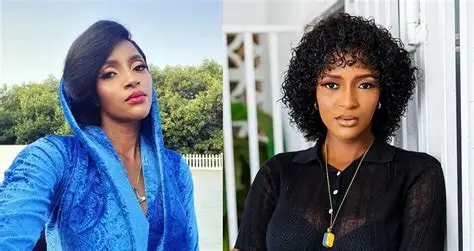
Zainab Sheriff, an artist and activist has been denied bail three times by our judiciary, actions that have not protected her right and justice also delayed. I don’t know her nor do I know anything about her work or activities but she as every other citizen deserves fairness, protection of her rights and dignity, and opportunities. The judiciary and law enforcement must not be based on selective justice that is based on class or political affiliations. It begs the question of the independence of our judiciary and law enforcement institutions. Are they only reactive and enforced with zest when the individual is perceived as the other? Hence, this sends a subliminal message that belonging is the only way the law protects you. Being othered means no protection from the law. This erodes confidence in our judicial systems for entire segments of society.
If the statement by the President is anything to by, then the young woman, Zainab Sheriff should be out on bail by now… for justice delayed is justice denied. If the President can introspect on his own speech, then he would realise the grave injustice at hand. Injustice anywhere is a threat to justice everywhere. Our peace depends on social justice, fairness and equity in the country. Upholding women’s right is a key social justice and equity issue for democratic and alternative progressive systems of government.
Women empowerment is critical for building stronger families, communities, knowledge systems, national character and development. Our national consciousness and identity should be born out of the actual collective aspirations of the people, that include women and girls…