


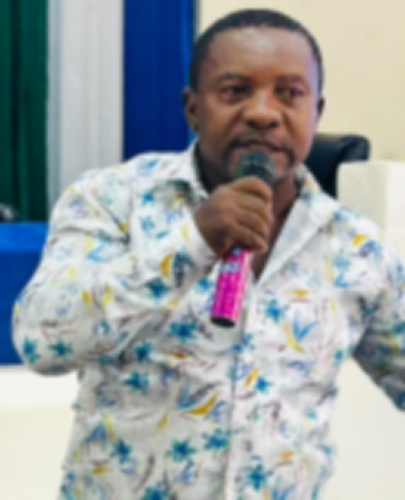
Former Vice President of the Sierra Leone Association of Journalists (SLAJ), Mr. Sahr James Gangah, has warned that the 2026 Population and Housing Census is one of the most sensitive national exercises that can either unite or divide the country depending on how it is reported.
Presenting on the topic “Ethics in Reporting on Census” at the one-day Regional Media Engagement organized by the Ministry of Information and Civic Education in collaboration with Statistics Sierra Leone and SLAJ, with support from UNFPA, in Makeni City Council Hall. Mr. Gbangah said census reporting touches on tribe, region, politics, religion and resources, and therefore demands the highest ethical standards.
“The census is one of the most sensitive national exercises. It touches on tribe, region, politics, religion, and resources. If reported badly, it can divide the nation. If reported ethically, it can unite and develop the nation,” Gangah told over 100 journalists gathered at the Makeni City Council hall in Makeni.
He outlined seven ethical pillars that must guide journalists as the country prepares for Census Night on 1st December 2026 and enumeration from 2nd to 15th December 2026.
On his first point, Mr. Gangah urged journalists to report the correct figures, methodology and definitions as released by Statistics Sierra Leone.
His ethical consideration, he said, is Truth and Accuracy. “Do not rush to be first with ‘leaked’ figures on WhatsApp. Do not round up, exaggerate or misinterpret. A population of 7,548,702 is not ‘about 8 million.’ Verify every figure with Stats SL before publication. Avoid false precision,” he warned.
Secondly, he said journalists must present census data as a development tool, not a political scorecard.
“This is critical in Sierra Leone. Do NOT report as ‘Mende population bigger than Temne’ or ‘South-East outnumbers North-West, so SLPP will win.’ Such framing fuels hate and mistrust. The question is not ‘who is more?’ but ‘what do these people need?’ The IMC Code of Practice demands you do not incite tribal hatred,” Gangah stated.
Thirdly, he said the media must educate the public that individual information given to enumerators is confidential by law.
“Never publish identifiable information of respondents. Do not interview a household and reveal that they have 5 children, no toilet, or that the head is unemployed. The Statistics Act 2002 protects respondents – the media must uphold that spirit. Do not force people to disclose their census answers on live radio,” he cautioned.
On independence, the SLAJ Vice President urged journalists to monitor the census process – recruitment of enumerators, payment, logistics to hard-to-reach areas – without compromise.
“Do not accept money from politicians or districts to ‘boost’ or ‘suppress’ figures. Do not allow any party to use your newspaper or radio station to call for a boycott or to inflate numbers. Report funding and logistical failures without fear or favour,” he said.
Fifth, he called for responsible handling of rumours and fears, under the principle of Do No Harm.
“Do not sensationalize stories like ‘Census staff chased in Kono’ without context, or ‘People hiding from census because of witchcraft’ in a way that mocks communities. At the same time, do not create panic about data misuse. Avoid headlines that scare people from participating,” Gbanga advised.
He also emphasized equity and social justice, urging journalists to ensure hard-to-count groups are covered.
“Make a special effort to report whether persons with disabilities, street children, prisoners, fishermen at sea on Census Night, and people in informal settlements are being counted. Interview them ethically – with dignity, not as objects of pity, and with informed consent,” he said.
Finally, Mr. Gangah said the media’s role is public education, not propaganda, and must explain technical concepts in local languages.
“Use Krio, Mende, Temne, Limba to explain Census Night, de facto vs de jure counting, and why everyone must be counted where they sleep on 1st December. Correct misinformation that ‘census is for APC or SLPP’ or ‘for taxing,'” he stated.
In conclusion, the SLAJ Vice President challenged every journalist to apply a simple ethical test before publishing any census story.
“An ethical journalist reporting the census in Sierra Leone must ask: Is this story true? Is it fair to all tribes and regions? Does it protect the privacy of the person who trusted the enumerator? Does it help national development or just create division?” he said.
He warned that if the media fails this test, the census numbers will be contested, boycotted, or politicized – as seen in some past censuses in Africa- but if the media passes it, the 2026 Census will be trusted, and Sierra Leone will finally have credible data to plan for every Sierra Leonean.