


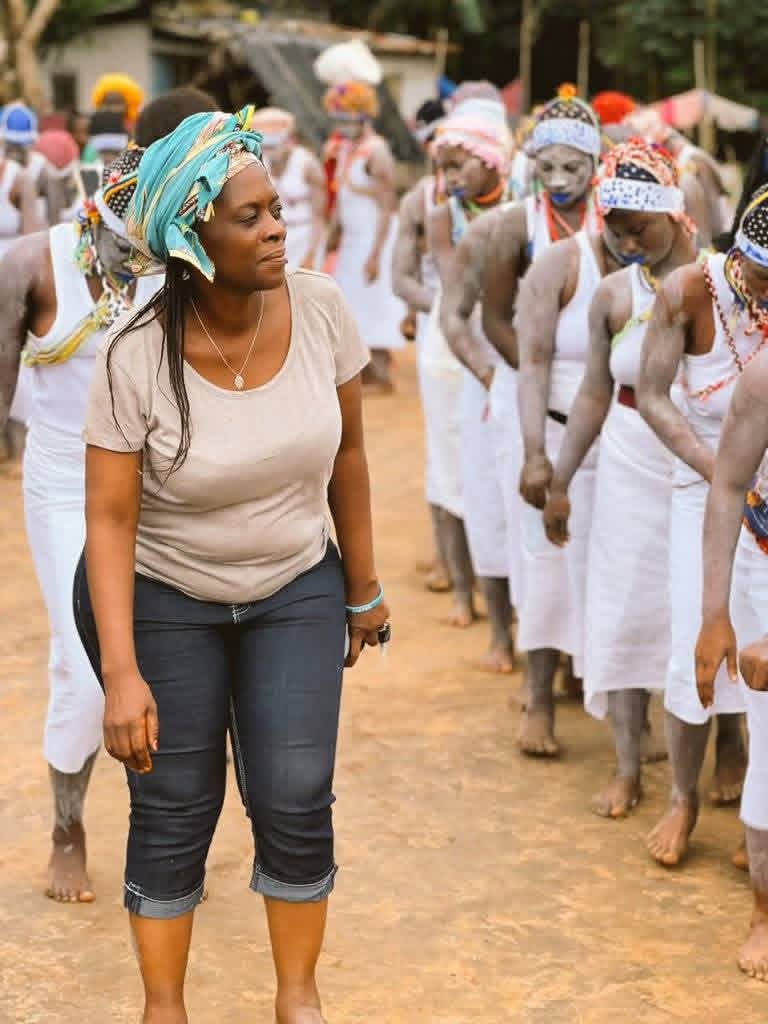
Fifty-five young women have entered a 10-day Bloodless Bondo rite of passage in Mabalay Community, Thawuya Section, Bake Loko Chiefdom, in a landmark move to end Female Genital Mutilation while keeping Sierra Leone’s cultural heritage intact.
The initiative was launched by the Amazonian Initiative Movement Sierra Leone, AIM-SL, and began with the traditional Masorko vigil that marks official entry into the bush. For the next ten days, the participants will receive cultural education, leadership training and instruction on the values of Bondo society. The only element removed is the cutting of female genitalia.
At the end of the programme, the women will graduate as full members of the Bondo society through what organizers describe as a safe, dignified and bloodless rite.
“Bloodless Bondo retains our culture but removes the harm,” said AIM-SL Executive Director Madam Rugiatu Neneh Turay. “Girls and women should never have to suffer pain, trauma or lifelong complications to be accepted by their communities.”
Madam Turay thanked partners and stakeholders for supporting communities working to replace harmful practices with safer alternatives. She said all 55 participants went through a screening before admission.
“In the Bloodless Bondo, we do not accept underage girls. We want people to see these women as role models for a new generation,” she said. “We are also developing traditional language, symbols and practices that strengthen the culture without harming women.”
AIM-SL says the model keeps the core teachings of Bondo: respect, discipline, womanhood, leadership, family life and community values. Partners and stakeholders will be invited to witness different stages of the programme to show that cultural identity can be preserved without violence.
Health experts and human rights groups have long warned that FGM has no medical benefit and can lead to severe bleeding, infection, chronic pain, childbirth complications, infertility and psychological trauma, and in some cases, death.
Port Loko District has emerged as one of the pioneering areas demonstrating that alternative rites can succeed with backing from traditional leaders, former Soweis, women and the wider community.
The graduation comes as the future of FGM remains a subject of national discussion. Recent public comments by Sierra Leone’s First Lady expressing support for women who perform FGM have intensified the debate.
For campaigners, AIM-SL’s programme offers a different answer: that culture and human rights do not have to clash.
“Communities do not have to choose between preserving Bondo traditions and protecting the health and dignity of girls. They can do both,” one advocate said.
Organizers believe the Bloodless Bondo model is now one of the strongest practical examples that FGM is not a prerequisite for cultural identity.
As the 55 women continue their initiation in Mabalay, the message being sent across the country is clear: traditions can adapt, culture can evolve, and no woman or girl should have to endure violence in the name of culture.