


For decades, West Africa has been very good at one thing: talking about integration.
We have held summits. We have issued communiques. We have promised free movement, free trade, and common prosperity. And then we have gone home, back to the same bad roads, the same expensive food, the same darkness, and the same borders that choke our traders.
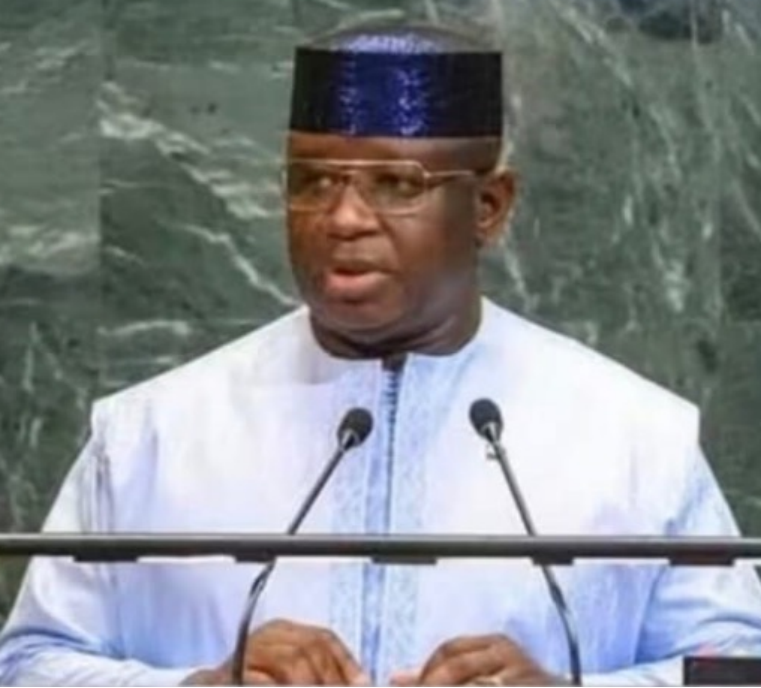
When President Dr. Julius Maada Bio closed the inaugural West Africa Integration and Investment Summit (WAIIS) 2026 in Lungi, he did not close with just another declaration. He closed with numbers:
13 agreements signed. 7 major announcements and launches. 122 projects. An investment pipeline of approximately US$19 billion.
That is not a communique. That is a deal room.
Yes, Sierra Leone hosted it. But WAIIS was not a national jamboree. It was a regional marketplace.
The Mano River Union Strategic Economic and Industrial Corridor – linking Sierra Leone, Guinea, Liberia and Côte d’Ivoire, with US$600 million in priority projects- is a clear signal: our future is not national; it is regional.
The coastal cabotage shipping service linking Freetown to other West African ports attacks one of our oldest problems: we are coastal neighbours who cannot trade by sea, forced to move goods on broken roads.
The US$1 billion Agribusiness and Rice Sovereignty Facility, with US$500 million for rice alone, attacks another shame: a region that can feed itself but spends billions importing rice.
If these projects move, West Africa will finally begin to look like what President Bio called for: not a Community of States, but a Community of Markets.
The headlines will rightly focus on the big numbers:
The Banana Island Deep-Water Port and Railway, US$2.7 billion for the port alone, US$6.1 billion for the port and railway combined with Kent Harbour Terminal, has the potential to change Sierra Leone from a peripheral port to a regional logistics hub.
The US$200 million Afreximbank facility for Pavifort, the US$2 billion Three Cities and Ring Road programme, the US$415 million Nant 108MW gas-to-power plant, and the Teyei Hydropower Project speak to the two things Sierra Leone needs most: infrastructure and power.
But look beyond the billions:
A mobile phone assembly plant in Sierra Leone.
For a country that imports everything, even the phones we use to complain about imports, this is a statement of intent: we must begin to make things.
A Sierra Leonean telecom brand expanding into other African markets, with Sierratel and Africell, is a reversal of history. For once, we are not just a market. We t ( what is here) complete this sentence.
The Bank of Sierra Leone buying gold from Baomahun to build national reserves, and licensing TOCAM Merchant Bank, are quiet but powerful steps toward financial sovereignty.
A second submarine fibre-optic cable and the ECOWAS Data Embassy initiative are about the future: data, connectivity, and digital sovereignty.
These are not just projects. They are a new mindset.
President Bio was brutally honest in his closing address, and he deserves credit for it.
He challenged governments and the private sector to move beyond declarations, remove barriers to trade, expand finance for women and youth, and ensure agreements become jobs and livelihoods.
He is right. Sierra Leoneans have heard big numbers before. We have seen groundbreakings that never became buildings. We have seen MOUs that died in filing cabinets.
That is why the most important sentence of the entire summit may not have come from the President, but from Dr. Kandeh Kolleh Yumkella:
“Your Excellency, we have delivered for you. The conference ends today, but the deal room remains open.”
That must be the promise. WAIIS cannot be a two-day event. It must be a permanent process.
What must happen now:
1. Publish the deals: The public must see timelines, costs, sponsors and obligations. Transparency is the best antidote to cynicism.
2. Protect the small players: A US$19 billion pipeline must not become a playground for only big foreign firms. Women traders, youth entrepreneurs, local SMEs and farmers must get access to finance and contracts.
3. Fix the basics: A port without good roads, a factory without reliable power, a farm without storage will fail. The Ring Road, the Northern Transmission Corridor, and the Utility Masterplan must move together.
4. Keep ECOWAS honest: Regional integration dies when member states sign in Lungi and block trucks at the border the next week. The political will shown at WAIIS must be shown at our borders every day
WAIIS 2026 has given President
Bio and West Africa something rare: momentum.
Sierra Leone has proven it can convene the region, attract financiers, and turn political vision into an investment pipeline. That is leadership.
But summits do not feed people. Agreements do not light homes. MOUs do not create jobs.
If in two years, the Banana Island Port is under construction, the Nant plant is feeding 60MW into the grid, AgriConnect is putting Sierra Leonean rice on our tables, and a Sierra Leone-assembled phone is in our hands – then WAIIS 2026 will be remembered as the moment West Africa stopped talking and started building.
If not, it will be remembered as just another beautiful summit in Lungi.
The deal room is open. The world is watching. West Africa must now deliver.