


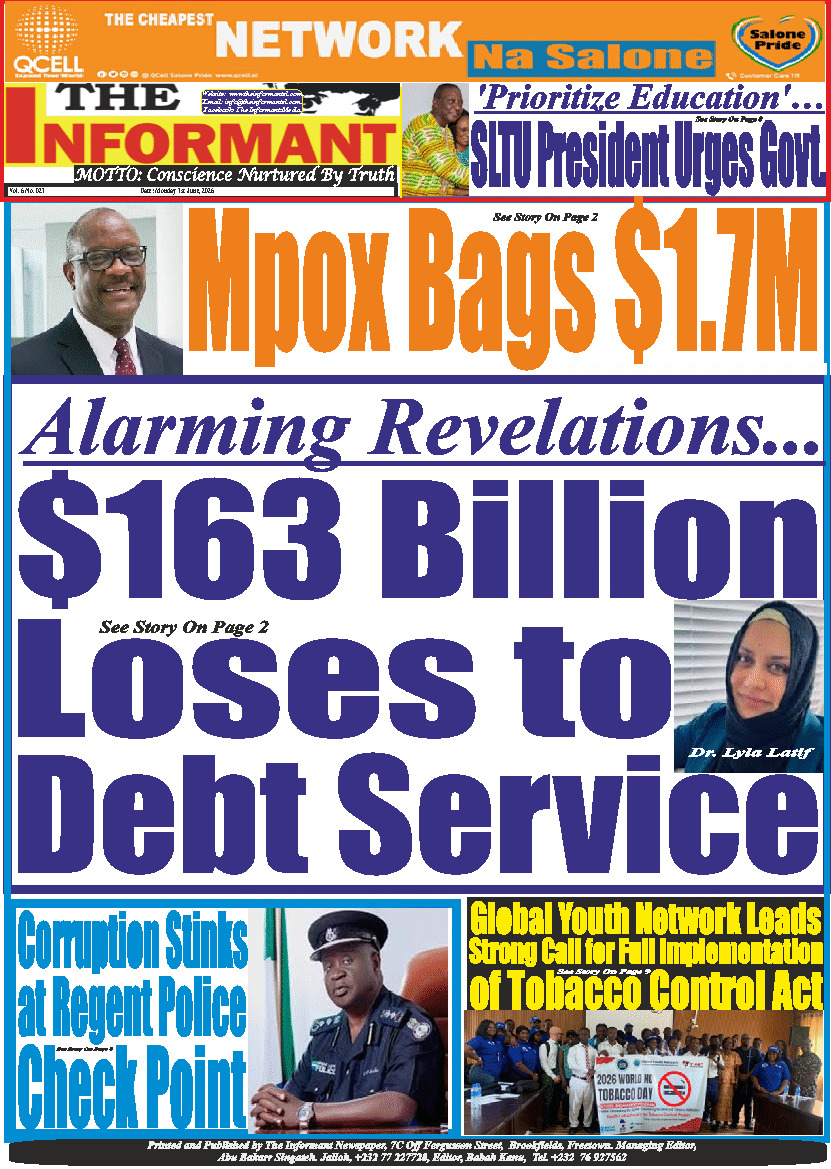
African countries spent an estimated US$163 billion on external debt servicing last year, a financial burden that continues to deprive critical sectors such as education, healthcare, and infrastructure of much-needed investment, according to Pan-African lawyer and tax justice advocate Dr. Lyla Latif.
Speaking at a policy forum on fiscal sovereignty, Dr. Latif warned that Africa’s reliance on expensive foreign borrowing has created a cycle in which debt repayments take precedence over domestic development priorities.
“We are watching schools remain under-resourced, hospitals operate without adequate medicines, and roads remain unfinished while huge sums of money flow out of the continent to service loans,” she said.
Dr. Latif, a globally recognized specialist in tax policy, public finance, and technology governance, argued that African governments must significantly expand domestic revenue generation to reduce dependence on debt. She identified the digital economy and high-seas infrastructure as major untapped sources of revenue.
“Data is worth a trillion US dollars. Nobody taxes data,” she stated, noting that major cloud computing companies and digital platforms generate substantial profits from African users while paying little or no tax within the countries where the value is created.
According to her, multinational cloud providers, social media platforms, and digital payment processors earn billions of dollars from African markets, yet much of this revenue is recorded in low-tax jurisdictions outside the continent. Similarly, undersea cables, satellite systems, and other digital infrastructure that facilitate Africa’s internet connectivity remain largely outside the reach of national tax systems.
Dr. Latif called on the African Union and regional economic blocs to develop coordinated frameworks for taxing digital economic activity and cross-border digital infrastructure.
“We cannot continue financing our development through debt while the wealth generated from our own data and digital activities leaves the continent untaxed,” she emphasized.
Her remarks come at a time when many African governments are grappling with shrinking fiscal space and rising debt obligations. Economic analysts have identified debt servicing as one of the fastest-growing expenditures in national budgets, often exceeding allocations for essential social services.
While acknowledging that implementing such reforms would require political commitment and technical expertise, Dr. Latif described the issue as one of economic sovereignty.
“Fiscal sovereignty means deciding who pays, what gets funded, and who controls public revenue. At present, many of those decisions are effectively being made outside the continent,” she said.
Although some African countries have introduced digital services taxes, experts argue that isolated national measures have had limited success. Dr. Latif therefore urged African governments to adopt a unified continental approach that would prevent harmful tax competition and ensure multinational corporations operate under consistent rules across African markets.