


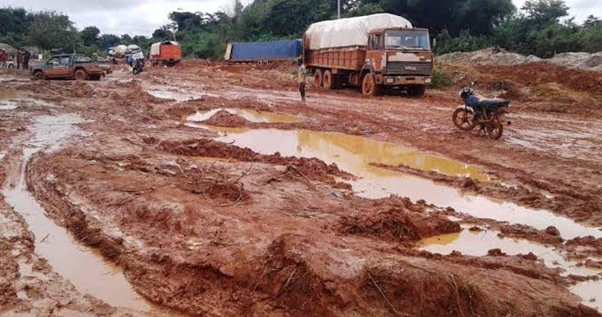
The people of Mongo Chiefdom in Falaba District have been cut off from emergency healthcare after the only ambulance serving the area was withdrawn due to impassable roads.
The shocking development was confirmed in a communication from the District Medical Officer (DMO) of Falaba, Dr. Daniel Lavalie, who informed his team that there is no ambulance available for Mongo at the moment because access has been completely blocked by thick mud.
“There is no ambulance available for Mongo at the moment as access has been obstructed by muddy road conditions,” Dr. Lavalie stated.
For Mongo – one of the most remote chiefdoms in Sierra Leone – this is not just an inconvenience. It is a death sentence waiting to happen.
Health workers on the ground say the disruption raises serious concerns for patients requiring urgent referral – particularly pregnant women in labour, children with severe malaria or pneumonia, accident victims and other emergencies who need to be moved quickly to Kabala Government Hospital or higher facilities.
Without an ambulance, families are forced to resort to motorbikes, hammocks, or carry patients on foot through muddy, slippery roads – often for hours – increasing the risk of death from delays.
“An ambulance is the lifeline here. If a woman is bleeding after delivery in Mongo and the road is blocked, what do we do? Watch her die?” a community health worker asked The Informant.
Mongo and most communities in Falaba District suffer chronic road neglect. During the rainy season, unpaved roads become rivers of mud, cutting off entire chiefdoms from Kabala, the district headquarters.
Residents say the situation is not new. Every rainy season, they are isolated. Medical supplies cannot come in. Health workers cannot move out. The sick cannot be transported. Yet year after year, there is no sustainable fix.
The incident exposes a painful truth: access to healthcare in Sierra Leone is not just about doctors and clinics. It is about roads. A hospital without a road is no hospital at all.
The reported disruption is now raising tough questions for the Falaba District Council, the Sierra Leone Roads Authority (SLRA), and the Ministry of Health.
Residents and civil society are calling for urgent collaboration between health authorities, local councils, community leaders and road maintenance agencies to find practical solutions – from spot gravelling and culverts to a dedicated road maintenance fund for emergency health routes.
“This is an emergency. Government must treat roads to Mongo as health infrastructure, not just roads,” a youth leader in Mongo told The Informant by phone.
While the DMO’s communication confirms the current unavailability, there is no word yet on how long the disruption will last, or what alternative emergency arrangements – such as stationing a 4×4 ambulance on the Mongo side or using community motorbike ambulances – are being put in place.
The people of Mongo are appealing to the Government, development partners, and the Office of the Vice President, which supervises health financing reforms, to intervene before a preventable death occurs.
For now, Mongo waits – in mud, in fear, and without an ambulance.
Residents are advised to remain attentive to updates from health authorities, but many say what they need is not updates, but action.