


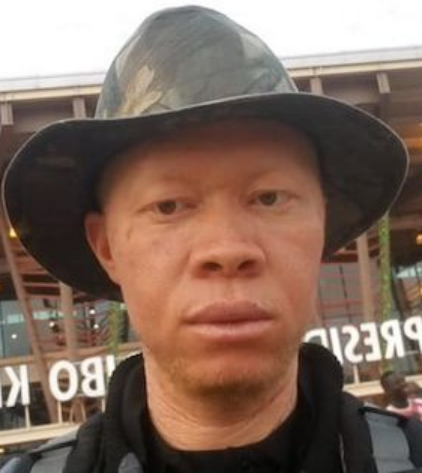
Persons with albinism in Sierra Leone have issued a strong call for equal access to employment and full participation in the country’s electoral process, accusing key state institutions, including the Electoral Commission for Sierra Leone (ECSL), of systemic discrimination and exclusion.
The demand was made during an advocacy engagement organized in Freetown by the Sierra Leone Association of Persons with Albinism (SLAPA) and supported by disability rights groups, ahead of preparations for the next electoral cycle.
Executive Director of SLAPA, Mohamed Osman Kamara, said persons with albinism continue to face prejudice in everyday life, despite being recognized as persons with disabilities under the Persons with Disability Act of 2011.
“That Act gives us the right to free medical services, education, transport and public space. But yet with all this in law, we still do not have access to them,” Mr Kamara said, reiterating concerns his organization raised in 2023.
Members of the association cited three major areas of concern namely: 1 Employment Discrimination: Speakers said qualified persons with albinism are routinely denied jobs after physical interviews, or forced to self-censor their condition during recruitment to avoid stigma. They noted that lack of reasonable accommodation for low vision a common condition associated with albinism during aptitude tests has cost many candidates opportunities. They referenced reports by the UN Independent Expert on Albinism that persons with albinism are denied employment even after successfully completing internships, 2. Exclusion from Elections: The group accused political parties and the ECSL of failing to make the electoral process inclusive. They said polling centres often lack large-print ballots, magnifiers, and shade cover, exposing persons with albinism, who are highly sensitive to sun, to hours in open sun. They also complained of lack of voter education materials in accessible formats and low representation of persons with albinism as voter registration staff, polling agents and observers.
SLAPA called on ECSL to comply with Section 18 of the Disability Act which prohibits discrimination in political and public life, and Section 43 of the Political Parties Regulation Commission Act of 2022 which requires political parties to make adequate provision for persons with disabilities in executive positions from ward to national level.
“When political parties engage us, they treat us as charity cases to showcase at rallies, but they do not give us meaningful platforms to contest for parliamentary or local council seats,” said a representative of the Sierra Leone Union on Disability Issues (SLUDI) who attended in solidarity and 3. Denial of Social Services: The group also lamented discrimination at public hospitals and schools. According to local NGOs, discrimination against persons with albinism has been documented in Freetown and Kenema, including mistreatment and denial of medical care, despite Section 17(1) of the Disability Act guaranteeing free medical services in public health institutions.
Human rights observers say the challenges are compounded by harmful myths, name-calling, and lack of affordable sunscreen and visual aids. A previous study cited by the UN found that 80% of persons with albinism in Sierra Leone reported being called derogatory names.
The association is now demanding:
– A quota for persons with disabilities, including persons with albinism, in public sector recruitment and within ECSL temporary election jobs;
– Mandatory inclusion training for ECSL staff and provision of low-vision aids, shaded polling queues, and priority voting;
– Enforcement of the 2011 Disability Act by the National Commission for Persons with Disabilities and the Human Rights Commission.
Efforts to get a response from the ECSL on the specific allegations were ongoing at press time yesterday. However, a senior official at the Political Parties Regulation Commission (PPRC) said the Commission monitors compliance and continues to engage parties on disability inclusion.
Civil society groups, including the Albinism Royal Foundation – Sierra Leone, say they will continue to push for reforms ahead of International Albinism Awareness Day 2026 advocacy activities planned for Bo District next month.
“We are not asking for pity. We are asking for the law to work,” Kamara said. “We are Sierra Leoneans. We want to work, vote, and be voted for like anyone else.”