


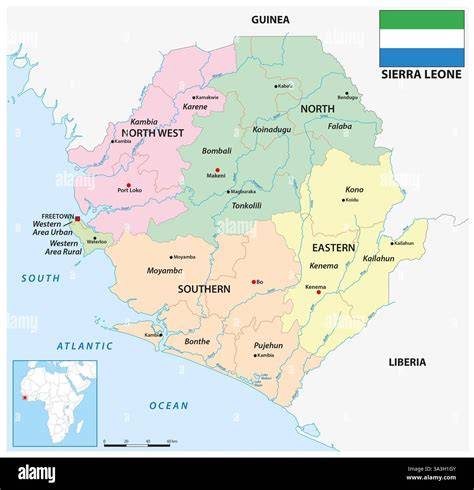
Sierra Leone has done it again. We have broken our own record. Last year, according to the Ministry of Finance’s Annual Economic Bulletin, this small, war-scarred nation exported $1.20 billion worth of minerals and timber. In 2023, it was $1.14 billion. Iron ore from Marampa and Tonkolili, rutile from Moyamba, bauxite from Port Loko, diamonds from Kono- the earth gave, and the world bought.
Yet in the Annual Public Accounts, the same government that counted the exports recorded something else: mineral revenue of just $41 million in 2024, and $28 million in 2023. Do the math. That is between 2.4 and 3.4% of export value. For every $100 of our minerals that left the Queen Elizabeth II Quay, less than $4 returned to the Treasury.
Experts, being generous and adding license fees and other non-tax inflows, stretch that figure to 7%. That is the number now haunting every economic forum from Freetown to Washington.
When our new Finance Minister, Mr Karefa Kargbo, asks aloud whether our mining agreements are fit for purpose, he is not being academic. He is asking whether we are a sovereign state or a quarry with a flag.
So we must ask the question our leaders have avoided for 30 years: Is Sierra Leone’s mineral wealth a blessing, or is it the cause of our perpetual poverty?
How We Gave Away the Mountain: The answer lies not in the ground, but in the documents signed above it.
First, we signed away our share. Analysis of large-scale agreements from 2006 to 2018 shows a pattern of staggering generosity. Companies were granted corporate income tax holidays of up to 10 years, exemptions from import duty on fuel, machinery and heavy equipment, and relief from Goods and Services Tax. One National Revenue Authority assessment found that despite mining accounting for over 80% of export earnings, it contributed less than 20% of total tax revenue. In one infamous case, $1 billion worth of rutile exports generated just $19.4 million in royalties over several years.
We did not negotiate. We capitulated. While Botswana demanded 50-50 profit sharing with De Beers and built a nation of middle-class citizens, and Indonesia banned raw nickel exports to force battery factories to be built on its soil, Sierra Leone settled for crumbs and called it investment.
Second, we perfected the art of fiscal opacity. If you want to hide a theft, make the ledger unreadable. The Ministry of Finance’s Economic Bulletin helpfully breaks down export values by iron ore, bauxite, rutile, gold and diamonds. But when you turn to the Annual Public Accounts, the document Parliament audits, those categories vanish. They are all merged into a single, meaningless line: “Mineral Resources.” Timber exports, worth $6.31 million in 2024, are not recorded under any distinct forestry revenue heading at all. You cannot hold a company accountable if you cannot see what it paid. You cannot hold a minister accountable if you cannot see what he received.
The Truth and Reconciliation Commission warned us two decades ago that “opaque natural resource governance perpetuates inequality and fuels public cynicism towards the State.” We ignored it. Cynicism is now the national mood.
Third, we refused to own what is ours. For 60 years, Sierra Leone has held zero equity in most of its major mines. We are rent collectors, not owners. When iron ore prices surge to $150 per tonne, Kingho and Marampa make windfall profits. When prices collapse, they threaten to shut down and lay off workers, and we beg them to stay. A 15% free carried interest standard in Ghana, in Zambia, in Tanzania — would have meant that when the company profits, the country profits. Instead, we are left arguing over royalties while others capture the capital gains.
The Cost of 7%: Let us strip the economics and talk about what 7% means in a classroom in Koidu.
It means a district that produces diamonds worth hundreds of millions cannot afford science teachers.
It means Tonkolili, home to the largest iron ore deposit in Africa, has one referral hospital with no functioning X-ray machine.
It means our national budget is still 30 to 40% dependent on foreign aid and borrowing. We are one of the most indebted nations in Africa, not despite our $1.2 billion in mineral exports, but because of the model that produces them. We export the wealth and import the debt.
Mines Minister Julius Mattai, to his credit, has started speaking an uncomfortable truth. At the launch of the Critical Minerals Strategy 2026-2031, he told investors: “If we mine responsibly but export all the value, then we have lived well, but not wisely.” And later: “Sierra Leone is open for business, not capture.” Those are not slogans. They should be policy.
Because the world has changed. Lithium, graphite, cobalt, and rare earths, all present in Sierra Leone, are no longer just commodities. They are the building blocks of the green economy. Every electric car, every solar panel, every AI data center needs them. The bargaining power has shifted, for the first time in a century, from the buyer to the owner of the rock. If we continue to sell raw rocks for 7%, we will be the only losers in the energy transition.
From Curse to Blessing: A Four-Point Demand: The Informant newspaper is not anti-mining. We are pro-Sierra Leone. And that requires radical surgery, not bandages.
One: Publish everything. The President must order the full publication of all large-scale mining agreements, including amendments, side letters, and fiscal concession orders granted by the NRA. What is signed in the name of 8.5 million people must be seen by 8.5 million people.
Two: Fix the books. Parliament must amend the Public Financial Management Act to require disaggregated reporting. Royalties, license fees, corporate tax, and surface rent must be reported by company and by mineral. No more hiding behind “Mineral Resources.” If timber exports are $6 million, show us the $6 million.
Three: Legislate a new floor. Sierra Leone needs a Model Mining Agreement fit for 2026, not 1966. A minimum 10% royalty for iron ore and diamonds, a sliding royalty that rises with commodity prices, a mandatory 15% state equity with an option to buy 20% more, and a ban on new tax holidays. Investment is welcome. Tax avoidance is not.
Four: Process here. No new large-scale license for bauxite, lithium, or rutile should be granted without a binding commitment to value addition. If we mine bauxite, we must smelt alumina. If we mine lithium, we must produce lithium salts. Exporting dirt is a colonial habit we must break.
We have heard the counter-argument for years: “If we are tough, investors will leave.” Investors left anyway when Ebola hit, when COVID hit, when prices fell. They will always leave when it suits them. The question is what they leave behind.
Botswana’s diamonds are almost gone, but its schools remain. Norway’s oil will run out, but its $1.6 trillion sovereign fund will not. What will Sierra Leone have when Marampa is a pit, and Kono is a crater?
We stand at a crossroads. With $1.2 billion in exports, we have proven we can dig. With 7% in return, we have proven we cannot yet govern what we dig.
Minerals are not a curse. Bad agreements are.
Until that 7% becomes 30%, until the Treasury captures what the soil provides, our minerals will remain not a blessing, but a cause- the cause of our anger, our debt, and our stunted future.