


Do Presidents Maada Bio & John Mahama Have INTELLECTUAL DEPTH, And A CONSCIENCE, To Apologize, And Provide Leadership For Reparations For The Protracted Holocaust of The Atlantic Slave Trade, And, Stimulate Cure For The African’s Slave Mentality? (Part 1)
Preamble
The above title is a very lengthy title for a newspaper column. I am going to write equally lengthy articles on this topic. I will serialize them. Apparently, most educated Africans have gotten themselves to believe that significant personal success is possible only when they clap and dance wildly in churches, or, go for Islamic pilgrimages at Mecca, or, effect state capture through a political party that would win a presidential election in the pseudo-democracies in Africa that give them licence to flagrantly steal public monies, with relative impunity. Most of the educated elites of Africa do not believe much in upward mobility through academic excellence; do not believe in hard work and gradual climb up a social ladder; do not believe they should take risks and be entrepreneurial; do not believe in guiding their societies to engage in science and technology and develop industries; so, they don’t bother to read much anymore. So, whilst the educated elites in the West can easily read a 500-page book in five hours, the average educated African elite would not bother to read any published article over 1,000 words. Especially if that article would be written by an indigenous writer; an indigenous Sierra Leonean. Duya, una read me article tay go to the end.
Most of what I write would need to be diluted into cartoon images; Nollywood-type video drama; Artificial Intelligence drama, if my ideas are to gain popular support, and the few enlightened Africans are to make headway in concocting cure for the African’s worst disease: the Slave Mentality. That would take time. And, it would cost substantial money.
Everything that the African has done, and, has abysmally failed to do, since the Independence Era of the 1960s hinges on understanding the deleterious effects of the Slave Mentality in the mindsets of Africans. Sustainable Development, political stability, cohesiveness of societies, have proven elusive for Africans because for the best of governments, they have failed to understand and confront and neutralize this Slave Mentality disease. The prevailing poverty and political fragility in Africa could get worse as man-made Climate Change gains momentum. For the African to avert worse case scenarios, the African must listen to a Green Prophet like Oswald Hanciles. Or, the African would acquiesce to mass suicide. Or, the African would capitulate to that intensification of mass murder which has been euphemistically called man-made Climate Change.
Maada Bio at Bunce Island
“His Excellency President Dr. Julius Maada Bio (President of Sierra Leone, and current Chairperson of ECOWAS) undertook an extensive inspection tour… of Bunce Island…
“In a solemn moment of remembrance, President Bio laid a wreath at the site known as the “Gate of No Return” in honour of the thousands of Africans who were forcibly taken into slavery….(from Bunce Island, hghlighting the importance of preserving the island as a symbol of history, resilience and remembrance….”
(SOURCE: Ministry of Tourism and Cultural Affairs [MTCA] Communications)
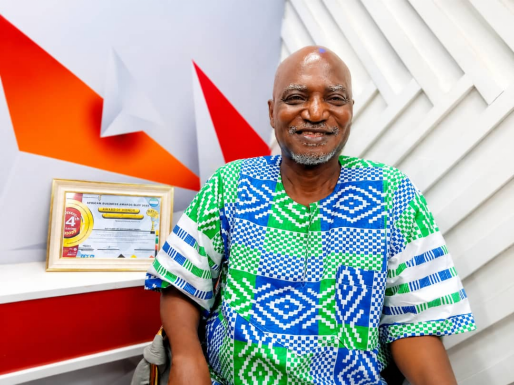
*Oswald Hanciles, The Founder and CEO of SLAVE SHIP-FREEDOM SHIP, the most prolific* *indigenous writer on the Atlantic Slave Trade since 1995 was not invited by the Minister of* *Tourism and Cultural Affairs, Nabeela Tunis, to be at Bunce Island.*
I plead with the President not to make the issue of Bunce Island one more promotional gimmick, but, to try to strive to harness the most knowledgeable and experienced and imaginative citizens on the historical significance of the Atlantic Slave Trade.
*John Dramani Mahama on Reparative Justice*
John Mahama (President of Ghana) has been one of the leading African voices calling for international recognition of the transatlantic slave trade as *the gravest crime against humanity* and for reparatory justice.
In his address to the United Nations General Assembly this year, Mahama said:
“The slave trade must be recognized as the greatest crime against humanity.” (SOURCE BusinessGhana)
Mahama reminded the world of the scale of what I have often written of as “the Protracted Holocaust” (juxtaposing the six years Holocaust on Jews by Adolf Hitler’s Nazi German with the four hundred years Holocaust of the Atlantic Slave Trade): “More than twelve and a half million Africans were forcibly taken against their will and transported to create wealth for the powerful Western nations.”
On justice and reparations, Mahama stated “Justice demands recognition, accountability, and reparative measures.”
When Ghana championed the successful UN resolution in March, 2026, Mahama described it as
“a pathway to healing and reparative justice”, and “a safeguard against forgetting.”
The UN General Assembly subsequently adopted a resolution describing the Atlantic Slave Trade as the “gravest crime against humanity,” a measure led by Ghana, and supported by many African and Caribbean nations.
In Ghana, and Sierra Leone, there are slave forts and castles scattered along the coast of West Africa. They are among the most powerful historical sites in the world. They stand as physical evidence of a system that forcibly removed millions of Africans from their homeland between the 15th and 19th centuries, and used and abused their bodies; psychologically bludgeoned their minds
What has not been fully captured in video documentaries targeting children and youth in Africa, and, the West, are the historical accounts of the Atlantic Slave Trade: overcrowded cells with little ventilation; darkness and extreme heat; human waste accumulating on the floors and being imbibed by shackled slaves; limited food and water; disease spreading rapidly; physical abuse and punishment: nauseous brutality that could only have been created by Satanic forces. Women were often confined in separate dungeons and were vulnerable to sexual exploitation by soldiers, merchants, and governors. (A recent DNA study done on African-Americans revealed that the majority of them trace their DNA to not only Africans, but, to white Spanish and Portuguese people). An estimated 10 million captives died before ever reaching a slave ship.
*The “Door of No Return”*
A particularly powerful feature of several slave castles in Ghana, Sierra Leone, Senegal….is the so-called ” *Door of No* *Return.”* That was mentioned by President Bio as he laid a wreath at Bunce Island on June 11, 2026.
At Cape Coast Castle and Elmina Castle, enslaved Africans were marched through a final doorway leading to waiting boats and slave ships. At the basement of the old Freetown City Council building adjacent to the SLPP headquarters in Freetown, there is a slave dungeon there where slaves were kept awaiting slave ships. For many, that was the last sight of Africa they would ever have.
Today, these sites are places of remembrance, pilgrimage, and education. Members of the African diaspora often visit them to reconnect with the history of their ancestors and to honor those who endured the Middle Passage.
The slave forts and dungeons are not merely Ghanaian, Senegalese, Gambian, or Beninese monuments. They are global memorials to one of history’s largest systems of forced human displacement.
For many historians, the importance of preserving these sites lie in their ability to provide tangible evidence of what occurred. Standing inside the dungeons, seeing the chains, the narrow cells, and the Door of No Return conveys the human reality of the slave trade in a way that books alone often cannot.
This is one reason why leaders such as John Dramani Mahama argue that recognition, remembrance, and historical accountability remain essential parts of the ongoing conversation about slavery, its legacy, and reparatory justice.
Next Steps
In Accra, Ghana, from 17th to 19th June, 2026, John Mahama hosted the *”Next Steps”* meeting. It was designed as the first major international follow-up to the UN General Assembly resolution recognizing the transatlantic slave trade and chattel enslavement of Africans as among the gravest crimes against humanity. Delegations from more than 80 countries attended.
John Dramani Mahama is now recognized as the African Union’s Champion for Reparations. At the conference was also the resonant and articulate Prime Minister of Barbados, Mia Mottley, one of the world’s leading advocates for reparations for the Atlantic Slave Trade. The President of Liberia, Joseph Boakai, was there. Liberia, like Sierra Leone, is significant in that a lot of slaves were captured from there to especially grow rice in South Carolina in America; and, in both countries, slaves freed from the Americas in the 18th and 19th centuries were returned to start new countries – Sierra Leone and Liberia. There were delegations from Namibia and Senegal.
Officials from the African Union and CARICOM were also present.
There were also legal scholars, historians, civil-society organizations, diaspora groups, and reparations experts from Africa, the Caribbean, Latin America, Europe, and North America. French President, Emmanuel Macron, participated via video address.
Mahama argued that the consequences of slavery and colonialism are not merely historical but continue to shape economic inequality, underdevelopment, racial discrimination, and global power structures. He urged countries that benefited from slavery and colonial exploitation must move beyond symbolic acknowledgements and engage with concrete forms of redress.
Mahama also emphasized that reparations are about justice and repair rather than assigning personal guilt to present generations.
A central theme of Mahama’s remarks was that Africa and the African diaspora should pursue a coordinated international strategy rather than fragmented national campaigns.
Mia Mottley continued the line she had advanced in Caribbean reparations diplomacy: that slavery generated enormous wealth for European powers while imposing lasting developmental costs on Africa and the Caribbean. She argued that reparatory justice should include economic reforms, debt relief, institutional changes, and acknowledgment of historical wrongdoing.
The President of France, Emmanuel Macron, acknowledged France’s historical role in slavery and argued that reparations should be considered part of an ongoing process of confronting history. While not endorsing a specific compensation scheme, he signaled a greater willingness than previous French governments to engage the subject publicly.
Many speakers stressed that formal state apologies are a necessary foundation for reconciliation. Reparations should not be limited to direct financial payments.
The return of cultural artifacts and looted heritage is essential.
International financial arrangements that perpetuate inequality should be re-examined.
The legacy of slavery continues to affect contemporary patterns of racism, poverty, and exclusion.
The most significant outcome was the adoption of a 19-point global framework for reparatory justice backed by African and Caribbean states. Key proposals include:
formal apologies by states and institutions involved in slavery and colonialism; compensation and other forms of restitution;
creation of a Global Reparations Fund;
return of stolen cultural property and heritage;
sovereign debt relief and broader economic reforms; climate-justice financing; expanded legal and institutional mechanisms to pursue reparatory claims.
The conference also established new international panels focused on reparatory justice, legal strategies, and cultural restitution, with the aim of carrying the agenda into future UN deliberations. The final document is expected to be presented at the next session of the UN General Assembly.
In short, the Accra meeting was not just a discussion forum. Its organizers intended it to mark a transition from moral recognition of slavery’s harms toward a coordinated international program seeking apologies, restitution, institutional reform, and – in some form – material reparations.
Unlock the African’s padlocked minds of Mental Slavery
At the conference site was displayed the works of a Ghanaian artist and poet, Sharon Dede Padi, (also known as Padiki), who became the first person recognized by *Guinness World Records* for the *Largest Leaf Print Painting,* measuring 54.33 square metres (the artwork was created in Accra, Ghana, using prints from various leaves), blending art and environmentalism. Padiki also displayed chains used during the era of the Atlantic Slave Trade; and, symbolically, locked padlocks, which she said symbolizes the locked minds of Africans today; the Mental Slavery, that represent “the lost souls of our ancestors” in a “silent cry”
The huge prison called Sierra Leone
Oswald Hanciles, The Founder and CEO of SLAVE SHIP-FREEDOM SHIP, the most prolific writer on the Atlantic Slave Trade since I returned home from Nigeria in 1995 was not present at the conference in Ghana. Living in Sierra Leone since 1995, I have been ‘imprisoned’ in a prison much worse than where Nelson Mandela was jailed by the racist Afrikaans in South Africa for 27 years. Mandela had it easier. His jailers were white. The world knew about his trial and imprisonment. I have been jailed in the huge prison called Sierra Leone; a prison without walls; a prison of the closed minds of the governing elites of Sierra Leoneans – including President Maada Bio. My idea of the fusion of the Atlantic Slave Trade and Climate Change has not been resourced to be popularized because the governing elites of Sierra Leone want my idea to be first endorsed by the white man.
Man-made Climate Change is the most vital existential threat for all humanity. In my fusion of the Atlantic Slave Trade and Climate Change for over forty years now – in Liberia, Nigeria, Ghana, and here in Sierra Leone – I have the most potent idea to give acceleration to the call for Reparations for the Atlantic Slave Trade.
That is another narrative in another article.
I pause,
Oswald Hanciles, The Guru
Founder and CEO of SLAVE SHIP-FREEDOM SHIP
+232-79-545715
June 24, 2026
06:17 hours in Freetown, Sierra Leone